
Concept to Reality
The promise of a perspective.
The proof of a real night.
A recent summer wedding in Ehden becomes a case study in something ELEVEN cares deeply about: preserving the idea when imagination becomes production.
The intention
Let the landscape breathe.
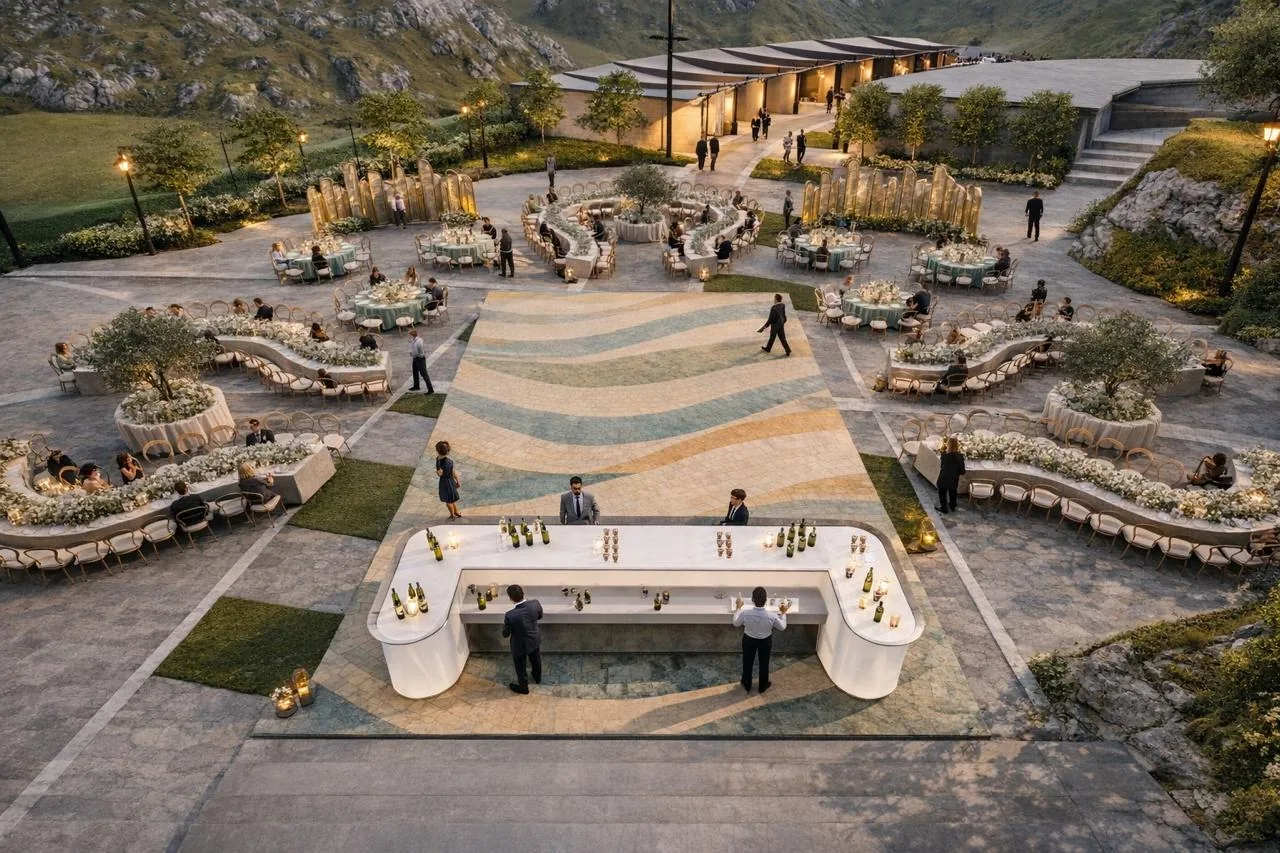
The perspective imagined a calm, open composition: curving guest tables framing a generous central floor, pale natural tones moving across the ground, greenery integrated into the architecture of the dinner rather than placed as isolated decoration, and a clean bar anchoring the foreground.
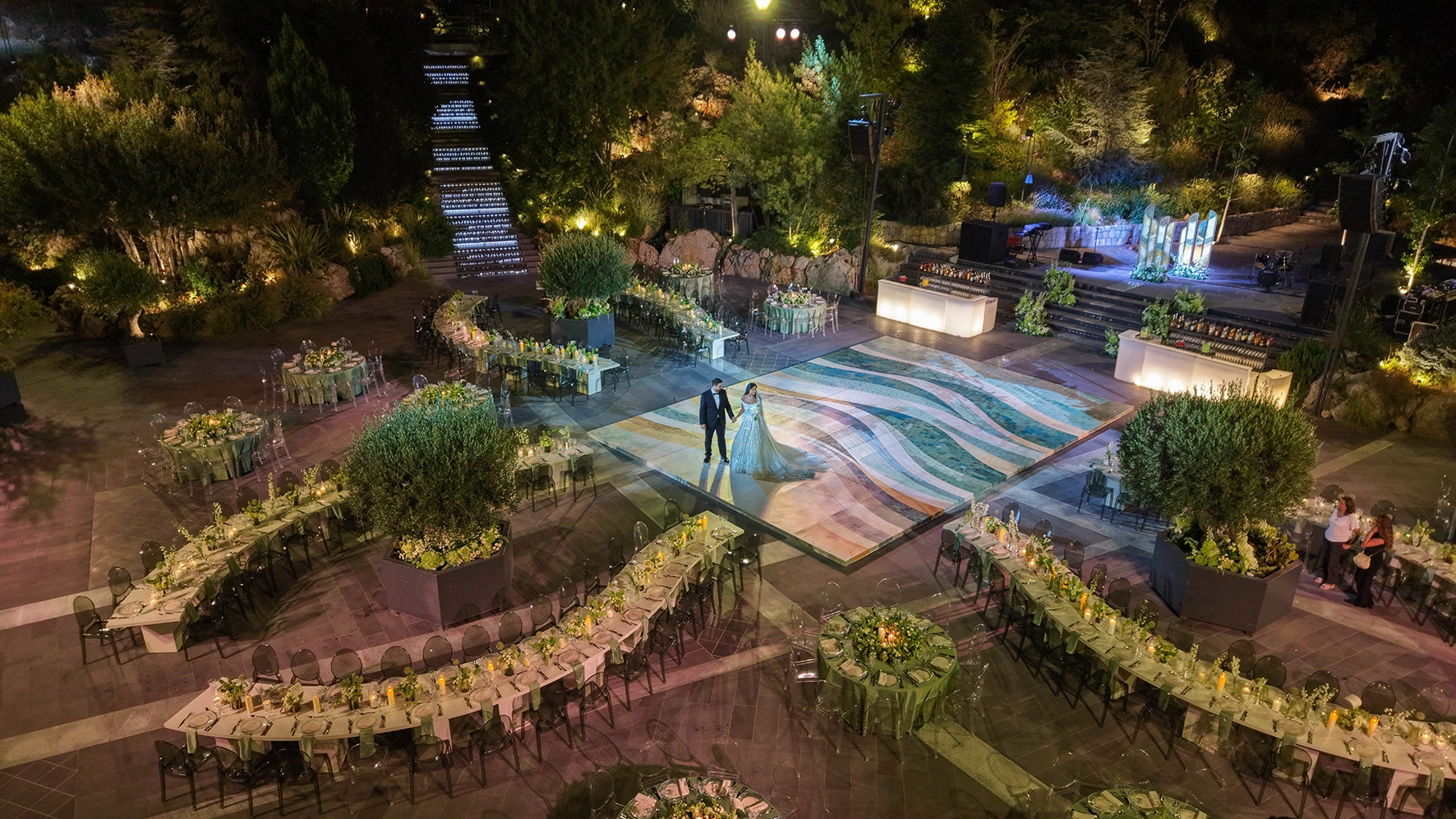
The final event kept that essential geometry alive. The venue became warmer at night, the landscape gained depth through lighting, and the central floor took on a stronger role as the emotional heart of the space.
The goal was not to reproduce pixels. It was to preserve the feeling.
That distinction matters. Concept-to-reality work is not successful because every chair sits in the exact same pixel. It succeeds when the delivered atmosphere still belongs unmistakably to the original idea.
Move between the two
Perspective ↔ Reality
Drag the line to compare the conceptual scene with the final event. Notice the continuity in the central floor, open composition, curved table language and relationship with the surrounding landscape.
What this case proves
Design credibility lives in execution.
A strong wedding planner should be able to show not only inspiration and renderings, but how design survives venue realities, production decisions and the dynamics of a real event.
Clarity
The concept had a strong spatial hierarchy before production began.
Continuity
Core design cues remained visible from visual perspective to final event.
Atmosphere
The night added depth, candlelight and emotion without losing the restraint of the original scene.
Planning a wedding?
Your perspective should survive reality too.
Tell ELEVEN what you want the day to feel like. The design comes after that.